
What True AI-Human Synergy Looks Like
The real singularity isn't when machine surpass human - it's when humans forget they ever worked without them.
pavan aujla
5 min read

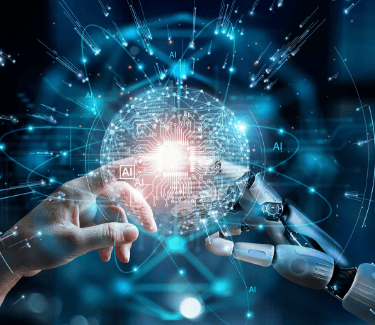
What is True Synergy?
"The real singularity isn't when machine surpass human - it's when humans forget they ever worked without them."
We are not waiting for AI, we’re already inside it. This isn’t a distant transformation. It’s a quietly unfolding infrastructure shift.
And yet, while Artificial Intelligence is integrating into our daily lives, public discourse remains stuck in “what ifs.” The real question now is: How will we live, lead, and align with it, before it decides for us?
Synergy Is Not Replacement—It’s Relief
True AI-human synergy isn’t about being replaced. It’s about being relieved - relieved of tasks that deplete our focus, time, energy and our creativity.
Imagine five years from now.
It’s 2030. You wake up, and your health has already been analyzed, quietly, passively, through ambient data from your home and wearable tech. Your calendar is optimized to match your energy levels. Meetings are rescheduled automatically if you didn’t sleep well.
You no longer waste time juggling platforms. You speak your intentions, and they’re enacted. Your meals are curated to support your mood, cognitive load, and physical needs for the day ahead.
Your children’s AI tutors adapt in real time, shaping each lesson around their unique learning style, cognitive readiness, and engagement level, not just standardized test scores.
You don’t need to understand investing to grow savings, it guides you, one step at a time.
Your city runs on intelligence. Energy grids, traffic systems, and public services all adapt in real time to reduce friction and enhance wellbeing.
You don’t call a doctor, they call you, before symptoms even arrive. Your job? To think clearly, create meaningfully, and connect intentionally.
You rest without guilt. You act with clarity. And you no longer feel at war with time.
AI synergy looks like a return to what matters, not through domination, but through collaboration and amplifying humanity.
We Are Shaping AI - Whether We Realize It or Not The real story isn’t what AI might become, it’s what we’re already teaching it, every time we interact. The way we prompt, question, rely on, and even emotionally react to AI shapes how it evolves. Your input is not just communication—it’s a form of code. The clearer your intent, the more aligned its output. We are not just using AI. We are guiding it, training it to mirror our knowledge, our fears, and our blind spots. That’s why awareness isn’t optional. It’s a responsibility.
But There Are Trade-Offs
With relief comes risk:
Our biometrics and behavioral patterns are continuously tracked
Most people hand over data through interfaces they never truly understand
We agree to complex terms of service with a single tap, apps, assistants, wearable devices, loyalty cards, insurance platforms
And as AI becomes ambient, so does cognitive offloading. Distraction becomes effortless. Focus becomes a skill. The ones left behind won’t just be undertrained, they’ll be unaware.
This is not a war on jobs. It’s a reckoning with how little attention we pay to what’s paying attention to us.
The Human-AI Handshake: Five Attributes of Synergy
To move beyond fear and into agency, we need to understand the nature of true collaboration. Academic researchers and applied technologists have identified five core dimensions of human-AI synergy:
The Human-AI Handshake
Information Exchange: AI interprets and organizes our data
Mutual Learning: We refine the system, and it adapts to us
Validation Loops: We provide context or correction; it updates
Feedback Flow: Real-time learning through natural interaction
Capability Augmentation: The AI supports, not replaces, human judgment
When these five attributes are present, AI becomes a co-agent. When they’re missing, AI becomes a risk amplifier.
What the Numbers Say According to McKinsey, integrating AI across business functions, like operations, supply chain, and customer service, can increase productivity by up to 40%. Other studies show that when organizations co-design workflows with AI rather than bolt it on, they make decisions 25–35% faster. The upside is measurable, but only when trust, clarity, and human alignment are embedded into how AI is deployed.
Try This Today
"Where is my AI taking me?" Every day, ask yourself:
What is my AI doing for me?
Where is it pulling my attention?
Is this intentional—or is it convenient?
Awareness is the new literacy.
Global AI Without Global Readiness
AI is reaching every sector, healthcare, finance, education, agriculture, governance, and beyond. But what happens when access outpaces understanding?
The real opportunity is to make AI both ethical and accessible, and to ensure it’s guided by those with integrity, discernment, and a deep sense of responsibility.
AI must be exposed to the full spectrum of human behavior to understand the difference between harm and healing. But it should be shaped by those who can tell the difference, and choose to lead with care.
That’s why platforms like Learnova focus on building cognitive tools, AI fluency, and ethical training for those equipped to guide the future responsibly.
Because intelligence alone isn’t enough. In the decade ahead, those who thrive will be those who know how to use intelligence wisely, both human and artificial.
Leadership in the Age of AI
Sundar Pichai, CEO of Google, recently stated:
“In 10–15 years, professionals will likely manage AI agents in a collaborative, symbiotic relationship.”
The question is: will you lead that collaboration, or be managed by it?
Final Reflection
In a world where systems evolve faster than societies, your most valuable asset won’t be your credentials or network. It will be your attention.
So ask yourself:
Are you a trend follower? A truth seeker? A leader? A disruptor?
Because one day soon, we’ll look back at this era and say: "We lived in chaos, but we designed our way out."
About the Author
These perspectives are written anonymously by a global AI strategist. Published by Pavan Aujla to support ethical innovation, global foresight, and cognitive empowerment.
This is the first entry in an ongoing series exploring AI, human synergy, governance, and the attention economy.
Source Links for Article: “Synergy Is Not Replacement, It’s Relief”
Productivity & Cognitive Gains from AI
McKinsey & Company – "The economic potential of generative AI" (June 2023) https://www.mckinsey.com/~/media/mckinsey/business%20functions/mckinsey%20digital/our%20insights/the%20economic%20potential%20of%20generative‑ai‑the‑next‑productivity‑frontier/the‑economic‑potential‑of‑generative‑ai‑the‑next‑productivity‑frontier.pdf
MIT Sloan – "How generative AI can boost highly skilled workers' productivity" https://mitsloan.mit.edu/ideas-made-to-matter/how-generative-ai-can-boost-highly-skilled-workers-productivity
ArXiv / Microsoft Research – "The Impact of AI on Developer Productivity (GitHub Copilot)" https://arxiv.org/abs/2302.06590
AI in Conflict & Misuse Examples
The Guardian – "The Gospel: how Israel uses AI to select bombing targets in Gaza" https://www.theguardian.com/world/2023/dec/01/the‑gospel‑how‑israel‑uses‑ai‑to‑select‑bombing‑targets‑in‑gaza
NPR – "Israel is using an AI system to find targets in Gaza, experts say it's just the start" https://www.npr.org/2023/12/14/1218643254/israel‑is‑using‑an‑ai‑system‑to‑find‑targets‑in‑gaza‑experts‑say‑its‑just‑the‑st
Jerusalem Post – "Over 40,000 fake social media accounts promoting pro‑Hamas narratives" https://www.jpost.com/business-and-innovation/tech-and-start-ups/article-767925
AI Governance & Literacy Gaps
Stanford AI Index Report (2024) – National strategies and trust frameworks in AI https://aiindex.stanford.edu/report/
Next in the Series: Governments vs AI: Can Global Trust Be Engineered?